And how is it that we hear, each of us in his own native language? Parthians and Medes and Elamites and residents of Mesopotamia, Judea and Cappadocia, Pontus and Asia, Phrygia and Pamphylia, Egypt and the parts of Libya belonging to Cyrene, and visitors from Rome, both Jews and proselytes, Cretans and Arabians—we hear them telling in our own tongues the mighty works of God.” (Acts 2:8-11)...so where did they all come from, geographically? This handy-dandy map may help you to place them all.
Showing posts with label pentecost. Show all posts
Wednesday, August 19, 2015
DID YOU KNOW: Where did all the languages at Pentecost come from?
At the day of Pentecost, there surely were a lot of peoples represented...
Labels:
acts,
did you know,
DIDYOUKNOW,
geography,
history,
holy spirit,
map,
maps,
pentecost
Monday, September 15, 2014
DID YOU KNOW: What is "Pentecost"?
This is a reprint from this summer's "DID YOU KNOW" series. But it is especially appropriate given this week's chapter.
What is "Pentecost"?
You may or may not have noticed, but today is the traditional observation of the church holiday of Pentecost. Unlike Christmas or Easter or even Palm Sunday, it is not often noted in Protestant churches (except Pentecostal ones) but it is an important day both for Ancient Israel and for the Church.
Pentecost is literally Greek for "the Fiftieth Day" on the Hebrew calendar and is set aside in scripture as a day to remember the giving of the law and thank God for His gift of the first fruits of the harvest. It's called "The Feast of Weeks" or Shavuot. (Exodus 34:22)
But Pentecost is also the day when the Holy Spirit came upon the apostles, visible as tongues of fire. They spoke in other languages they did not previously know, and from that time on did miracles through the power of the Holy Spirit (Acts 2:1-31).
There are many church traditions for Pentecost (none of which are scriptural, but they mark how various churches have regarded the holiday in times past). Many churches decorate themselves with the color red, in honor of the Holy Spirit. Some do special teaching or scripture reading in foreign languages, to commemorate the speaking in tongues. And many place a symbol of a dove prominently to remind Congregations to think of the Holy Spirit. The time between Ascension Sunday and Pentecost is often also marked with Fasting and Praying together, marking the time that the disciples waited patiently for the promised coming of the Holy Spirit.
What is "Pentecost"?
You may or may not have noticed, but today is the traditional observation of the church holiday of Pentecost. Unlike Christmas or Easter or even Palm Sunday, it is not often noted in Protestant churches (except Pentecostal ones) but it is an important day both for Ancient Israel and for the Church.
Pentecost is literally Greek for "the Fiftieth Day" on the Hebrew calendar and is set aside in scripture as a day to remember the giving of the law and thank God for His gift of the first fruits of the harvest. It's called "The Feast of Weeks" or Shavuot. (Exodus 34:22)
But Pentecost is also the day when the Holy Spirit came upon the apostles, visible as tongues of fire. They spoke in other languages they did not previously know, and from that time on did miracles through the power of the Holy Spirit (Acts 2:1-31).
There are many church traditions for Pentecost (none of which are scriptural, but they mark how various churches have regarded the holiday in times past). Many churches decorate themselves with the color red, in honor of the Holy Spirit. Some do special teaching or scripture reading in foreign languages, to commemorate the speaking in tongues. And many place a symbol of a dove prominently to remind Congregations to think of the Holy Spirit. The time between Ascension Sunday and Pentecost is often also marked with Fasting and Praying together, marking the time that the disciples waited patiently for the promised coming of the Holy Spirit.
Labels:
celebration,
did you know,
DIDYOUKNOW,
feast,
feast of weeks,
history,
holy spirit,
pentecost,
repost,
reprint,
tradition
Saturday, September 13, 2014
PHOTO OF THE WEEK: Pentecost in Stained Glass
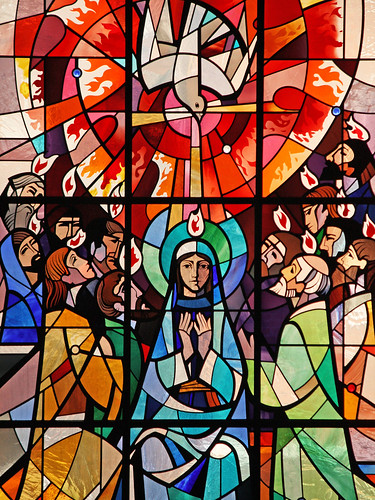
Modern stained glass depiction of Pentecost and the giving of the Holy Spirit from St Aloysius' church in Somers Town, London
Labels:
art,
pentecost,
photo of the week,
photography,
photos,
photos of the week,
stained glass
Sunday, June 8, 2014
DID YOU KNOW: What is "Pentecost"?
"DID YOU KNOW?" will be a summer series where we review issues of the Bible and the Christian faith of special interest. If you have a suggestion/question that you'd like addressed in a "DID YOU KNOW?" segment, please e-mail the coaches.
What is "Pentecost"?
You may or may not have noticed, but today is the traditional observation of the church holiday of Pentecost. Unlike Christmas or Easter or even Palm Sunday, it is not often noted in Protestant churches (except Pentecostal ones) but it is an important day both for Ancient Israel and for the Church.
Pentecost is literally Greek for "the Fiftieth Day" on the Hebrew calendar and is set aside in scripture as a day to remember the giving of the law and thank God for His gift of the first fruits of the harvest. It's called "The Feast of Weeks" or Shavuot. (Exodus 34:22)
But Pentecost is also the day when the Holy Spirit came upon the apostles, visible as tongues of fire. They spoke in other languages they did not previously know, and from that time on did miracles through the power of the Holy Spirit (Acts 2:1-31).
There are many church traditions for Pentecost (none of which are scriptural, but they mark how various churches have regarded the holiday in times past). Many churches decorate themselves with the color red, in honor of the Holy Spirit. Some do special teaching or scripture reading in foreign languages, to commemorate the speaking in tongues. And many place a symbol of a dove prominently to remind Congregations to think of the Holy Spirit. The time between Ascension Sunday and Pentecost is often also marked with Fasting and Praying together, marking the time that the disciples waited patiently for the promised coming of the Holy Spirit.
What is "Pentecost"?
You may or may not have noticed, but today is the traditional observation of the church holiday of Pentecost. Unlike Christmas or Easter or even Palm Sunday, it is not often noted in Protestant churches (except Pentecostal ones) but it is an important day both for Ancient Israel and for the Church.
Pentecost is literally Greek for "the Fiftieth Day" on the Hebrew calendar and is set aside in scripture as a day to remember the giving of the law and thank God for His gift of the first fruits of the harvest. It's called "The Feast of Weeks" or Shavuot. (Exodus 34:22)
But Pentecost is also the day when the Holy Spirit came upon the apostles, visible as tongues of fire. They spoke in other languages they did not previously know, and from that time on did miracles through the power of the Holy Spirit (Acts 2:1-31).
There are many church traditions for Pentecost (none of which are scriptural, but they mark how various churches have regarded the holiday in times past). Many churches decorate themselves with the color red, in honor of the Holy Spirit. Some do special teaching or scripture reading in foreign languages, to commemorate the speaking in tongues. And many place a symbol of a dove prominently to remind Congregations to think of the Holy Spirit. The time between Ascension Sunday and Pentecost is often also marked with Fasting and Praying together, marking the time that the disciples waited patiently for the promised coming of the Holy Spirit.
Labels:
celebration,
did you know,
DIDYOUKNOW,
feast,
feast of weeks,
history,
holy spirit,
pentecost,
tradition
Monday, May 20, 2013
DID YOU KNOW: What is "Pentecost"?
"DID YOU KNOW?" will be a summer series where we review issues of the Bible and the Christian faith of special interest. If you have a suggestion/question that you'd like addressed in a "DID YOU KNOW?" segment, please e-mail the coaches.
What is "Pentecost"?
You may or may not have noticed, but this past Sunday, May 19, is the traditional observation of the church holiday of Pentecost. Unlike Christmas or Easter or even Palm Sunday, it is not often noted in Protestant churches (except Pentecostal ones) but it is an important day both for Ancient Israel and for the Church.
Pentecost is literally Greek for "the Fiftieth Day" on the Hebrew calendar and is set aside in scripture as a day to remember the giving of the law and thank God for His gift of the first fruits of the harvest. It's called "The Feast of Weeks" or Shavuot. (Exodus 34:22)
But Pentecost is also the day when the Holy Spirit came upon the apostles, visible as tongues of fire. They spoke in other languages they did not previously know, and from that time on did miracles through the power of the Holy Spirit (Acts 2:1-31).
There are many church traditions for Pentecost (none of which are scriptural, but they mark how various churches have regarded the holiday in times past). Many churches decorate themselves with the color red, in honor of the Holy Spirit. Some do special teaching or scripture reading in foreign languages, to commemorate the speaking in tongues. And many place a symbol of a dove prominently to remind Congregations to think of the Holy Spirit. The time between Ascension Sunday and Pentecost is often also marked with Fasting and Praying together, marking the time that the disciples waited patiently for the promised coming of the Holy Spirit.
What is "Pentecost"?
You may or may not have noticed, but this past Sunday, May 19, is the traditional observation of the church holiday of Pentecost. Unlike Christmas or Easter or even Palm Sunday, it is not often noted in Protestant churches (except Pentecostal ones) but it is an important day both for Ancient Israel and for the Church.
Pentecost is literally Greek for "the Fiftieth Day" on the Hebrew calendar and is set aside in scripture as a day to remember the giving of the law and thank God for His gift of the first fruits of the harvest. It's called "The Feast of Weeks" or Shavuot. (Exodus 34:22)
But Pentecost is also the day when the Holy Spirit came upon the apostles, visible as tongues of fire. They spoke in other languages they did not previously know, and from that time on did miracles through the power of the Holy Spirit (Acts 2:1-31).
There are many church traditions for Pentecost (none of which are scriptural, but they mark how various churches have regarded the holiday in times past). Many churches decorate themselves with the color red, in honor of the Holy Spirit. Some do special teaching or scripture reading in foreign languages, to commemorate the speaking in tongues. And many place a symbol of a dove prominently to remind Congregations to think of the Holy Spirit. The time between Ascension Sunday and Pentecost is often also marked with Fasting and Praying together, marking the time that the disciples waited patiently for the promised coming of the Holy Spirit.
Labels:
celebration,
did you know,
DIDYOUKNOW,
feast,
feast of weeks,
history,
holy spirit,
pentecost,
tradition
Subscribe to:
Posts (Atom)

